
Infrared Lights
Infrared drying and curing lamps — handheld, mobile-stand and multi-arm units that cut filler, primer and topcoat cure times in the booth or on the prep deck.
Read the infrared lights buyers' guide →Infrared Lights products
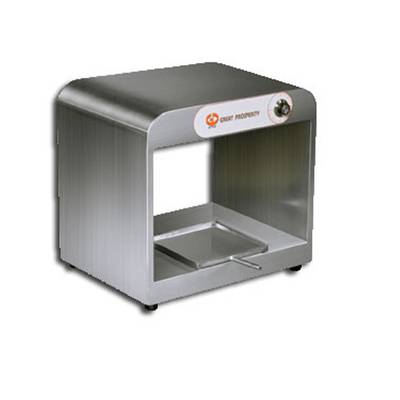
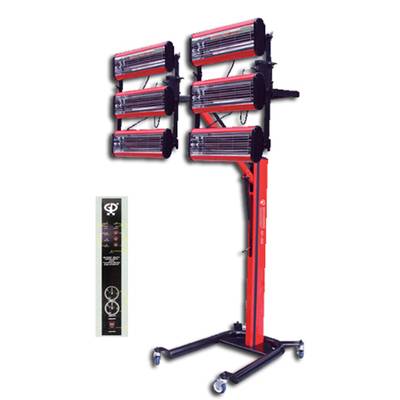
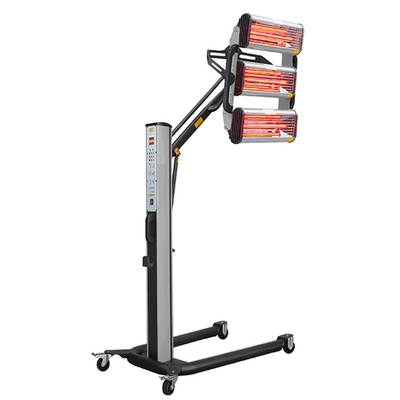
Infrared curing lamps for panel shops
Infrared lamps heat the substrate rather than the air, so paint, primer and filler cure from the panel outward. That means shorter cure cycles, less energy burned on heating a whole booth, and a booth freed up sooner for the next job.
Single-arm mobile units suit spot repairs and small panel work; multi-arm and arch systems cover a full side or a complete vehicle. Timer and temperature control let you repeat a cure cycle consistently instead of guessing.
Infrared drying works best as part of a properly specified paint shop, so we supply these lamps alongside our spray booths, prep decks and booth filters and can advise on placement, throughput and power supply.
Faster throughput
Cure filler, primer and topcoat in a fraction of conventional air-dry time.
Mobile units
Wheeled stands that move between prep bays and the booth.
Arch systems
Multi-arm and arch units for full-panel or whole-vehicle curing.
Controlled cycles
Timers and temperature control for repeatable, consistent cures.
Energy saving
Heats the panel, not the whole booth volume.
Nationwide delivery
Delivered across South Africa and exported into Africa.
Infrared Lights — frequently asked questions
- How much does an infrared curing lamp cost in South Africa?
- Price depends on the number of emitters, whether the unit is handheld, mobile or an arch system, and the control package. Each unit is quoted on request.
- How much time does infrared drying save?
- Cure times vary by product and film build, but infrared typically shortens a cure cycle substantially compared with air drying because heat is applied directly to the panel. Always follow the paint manufacturer's recommended times and distances.
- Can infrared lamps be used outside a spray booth?
- Yes. Mobile infrared units are commonly used on prep decks and in repair bays, provided the area is suitably ventilated for the products being cured.